
Request Appointment
Tips to Prevent Cavities
Created in
Cavities are little holes in teeth that can eventually cause big problems. They form when tooth-eroding acid attacks a tooth’s protective outer covering (enamel). This acid mainly comes from your diet and certain oral bacteria that thrive without effective oral hygiene. If cavities are not treated promptly, decay-causing bacteria can get further into the tooth, leading eventually to root-canal problems and even tooth loss. The good news is that cavities are completely preventable — meaning it is possible to keep all your natural teeth for life! Here are our top three tips to keep decay away:
Brush & Floss Every Day
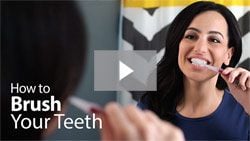
Cavity prevention starts with a good oral hygiene routine. This will remove dental plaque — a sticky film that harbors food particles and harmful bacteria. Flossing is imperative because a toothbrush can’t reach in between the teeth the way floss can. Make sure to floss both sides of every tooth, including the back molars, at least once daily. Brush your teeth at least twice daily using a toothpaste containing fluoride — a mineral that can become part of your tooth enamel and repair tiny cavities that are starting to form.
Pay Attention to Your Diet
Certain foods and beverages are no friends to your teeth, and soda tops the list. Soda, sports drinks, and so-called “energy drinks” are all acidic — even the sugar-free varieties. The acids they contain attack tooth enamel and make your teeth more prone to decay. Fruit juices can also be very acidic. Drinking water is much better for your dental health, not only because it has a completely neutral pH (is non-acidic), but also because it helps replenish your saliva — which has natural cavity-fighting properties. Sugary and starchy foods (cookies, candy, donuts, and chips) are also a problem — especially when they are not promptly cleaned from your mouth. They nourish the oral bacteria that cause cavities and raise the acidity level in your mouth.
See Your Dentist Regularly
Routine professional cleanings and exams are a great way to maintain oral health. Your dental hygienist can clean areas of your mouth that you can’t reach with your toothbrush or floss. We can check for early signs of tooth decay and take prompt action. Moreover, we can recommend specific preventive treatments if you are prone to cavities. These include in-office fluoride treatments and dental sealants, which are quick, easy, and effective procedures. Special mouthrinses might also be recommended. Working together, we can ensure your oral hygiene routine is all it should be, and that decay is kept at bay.
Related Articles
 Tooth Decay — A Preventable Disease Tooth decay is the number one reason children and adults lose teeth during their lifetime. Yet many people don’t realize that it is a preventable infection. This article explores the causes of tooth decay, its prevention, and the relationship to bacteria, sugars, and acids… Read Article
 Tooth Decay – How To Assess Your Risk Don’t wait for cavities to occur and then have them fixed — stop them before they start. Modern dentistry is moving towards an evidence-based approach to managing tooth decay — based on years of accumulated, systematic, and valid scientific research. This article discusses what you need to know to assess your risk and change the conditions that lead to decay… Read Article
 Dentistry and Oral Health for Children Dear Doctor magazine gives you a wide-ranging overview of milestones and transitions in your child’s dental development. Learn how to protect your children from tooth decay, dental injuries, and unhealthy habits while getting them started on the road to a lifetime of oral health and general well-being… Read Article